


About the course
Want to build a career behind the scenes of air travel?
Aviation Operations Level 3 at The City of Liverpool College prepares you for the roles that keep airports and airlines running smoothly.
This two-year course was developed with large companies in the UK aviation industry, so what you learn reflects real jobs. In your first year, you’ll study the NCFE Level 3 Introductory Diploma in Travel and Tourism through its aviation pathway. You’ll learn how the aviation industry works, with a strong focus on health and safety and aviation security. In your second year, you’ll progress to the Level 3 Extended Diploma in Travel and Tourism, aviation pathway, building on everything you’ve learned.
Along the way, you’ll develop the professional skills employers value, from clear communication and customer care to working calmly under pressure. These are skills you can use across travel, tourism and customer-facing roles, as well as in aviation.
When you finish, you could go straight into full-time or part-time work in a range of aviation roles. These include passenger services, ground handling, aircraft dispatch and security operations. You could also start an apprenticeship, or use your Level 3 qualification to apply to university or Higher Education (HE) to study aviation, tourism or business.
If you’ve already completed a Level 2 course in tourism, aviation or cabin crew at Merit or above, this is a natural next step. Our careers team will help you plan your route and prepare for applications and interviews.
Your first year is the NCFE Level 3 Introductory Diploma in Travel and Tourism (aviation pathway). Topics include:
- Aviation health and safety
- Aviation security
In your second year, you’ll study the Level 3 Extended Diploma in Travel and Tourism (aviation pathway).
- working as cabin crew
- handling emergency situations on board an aircraft
- looking after passengers on board
- cabin service and selling techniques
- making passenger announcements
- health and safety in aviation
- aviation security
- communication in aviation
- customer service in aviation
- problem solving in aviation
You’ll also take part in practical safety training, including firefighting, emergency evacuations and aviation first aid.
The Travel and Tourism department has developed a wide range of partnerships with sector leaders over the years. Through collaboration with industry, we make sure that all programmes are in tune with technological advances, so that our students are well placed to enter the workforce. These partnerships and collaborations also provide our learners with meaningful industry work placements relevant to their chosen career path, as well as a positive learning experience.
Our industry partners and collaborators include:
- National Museums Ltd
- John Lennon Airport
- British Airways
- Tate Liverpool
- Hilton Hotel Liverpool
- Jet2 airlines
To join, you’ll need four GCSEs at grade 4 or above, including English or maths and any subject-specific qualification your course asks for. You can also join with a Level 2 qualification in a related subject at Merit or above. If you’re 19 or over and have a strong portfolio or relevant experience, we’d love to hear from you.
If you haven’t yet achieved GCSE English and maths at grade 4 or above, don’t worry. You’ll study them alongside your course, at GCSE or Functional Skills, and we’ll support you every step of the way.
Frequently asked questions
It’s a two-year course. You’ll study the Introductory Diploma in your first year and the Extended Diploma in your second.
Each learner is required to create a portfolio of evidence which demonstrates achievement of 100% of the learning outcomes and assessment criteria associated with each unit.
The main pieces of evidence for the portfolio could include (in no particular order):
- Learner’s proof of work
- Assessor observation – completed observational checklists and related action plans
- Witness testimony
- Worksheets
- Assignments/projects/reports
- Record of professional discussion
- Record of oral and written questioning
- Learner and peer reports
- Recognition of Prior Learning (RPL)
You’ll achieve a Pass, Merit, Distinction or Distinction* for each year of your NCFE Level 3 qualification.
Where your course needs a uniform or kit, we’ll provide it, so you’re ready to take part in practical activities from the start. Wearing it gives you a real feel for industry standards, from professional presentation to health and safety, as you prepare for work in your chosen sector.
Key information
Duration
2 years
Study mode
Full-time
Hours per week
12
Awarding body
NCFE
Entry requirements
To join, you’ll need four GCSEs at grade 4 or above, including English or maths and any subject-specific qualification your course asks for. You can also join with a Level 2 qualification in a related subject at Merit or above. If you’re 19 or over and have a strong portfolio or relevant experience, we’d love to hear from you.
If you haven’t yet achieved GCSE English and maths at grade 4 or above, don’t worry. You’ll study them alongside your course, at GCSE or Functional Skills, and we’ll support you every step of the way.
Fees
If you are 16-18 years old at the start of your course, you will not need to pay for your course. If you are aged 19 or over you may be eligible for funding for this course depending on your personal circumstances and subject to a fee assessment as part of our enrolment process. If you are not eligible for a fee waiver, you may qualify for an Advanced Learner Loan to cover the cost of your course. Find out more at https://www.gov.uk/advanced-learner-loan, or contact our admissions team on 0151 252 3000 or at applications@liv-coll.ac.uk.
Funding
May be available depending on your circumstances, including Advanced Learner Loan. Find out more or contact admissions@liv-coll.ac.uk
Start date
Sept 2027
Where you'll study
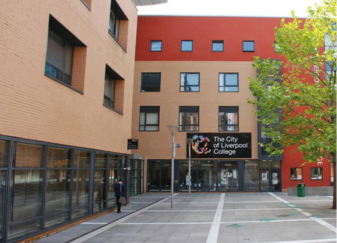
Duke Street
The City of Liverpool College, Duke Street,Tradewind Square,Liverpool,L1 5BG
In the middle of RopeWalks, one of Liverpool’s most characterful conservation areas, known for its food scene and its history
Accreditations
Your first year is the NCFE Level 3 Introductory Diploma in Travel and Tourism (aviation pathway). Topics include:
- Aviation health and safety
- Aviation security
In your second year, you’ll study the Level 3 Extended Diploma in Travel and Tourism (aviation pathway).
- working as cabin crew
- handling emergency situations on board an aircraft
- looking after passengers on board
- cabin service and selling techniques
- making passenger announcements
- health and safety in aviation
- aviation security
- communication in aviation
- customer service in aviation
- problem solving in aviation
You’ll also take part in practical safety training, including firefighting, emergency evacuations and aviation first aid.
The Travel and Tourism department has developed a wide range of partnerships with sector leaders over the years. Through collaboration with industry, we make sure that all programmes are in tune with technological advances, so that our students are well placed to enter the workforce. These partnerships and collaborations also provide our learners with meaningful industry work placements relevant to their chosen career path, as well as a positive learning experience.
Our industry partners and collaborators include:
- National Museums Ltd
- John Lennon Airport
- British Airways
- Tate Liverpool
- Hilton Hotel Liverpool
- Jet2 airlines
To join, you’ll need four GCSEs at grade 4 or above, including English or maths and any subject-specific qualification your course asks for. You can also join with a Level 2 qualification in a related subject at Merit or above. If you’re 19 or over and have a strong portfolio or relevant experience, we’d love to hear from you.
If you haven’t yet achieved GCSE English and maths at grade 4 or above, don’t worry. You’ll study them alongside your course, at GCSE or Functional Skills, and we’ll support you every step of the way.
Frequently asked questions
It’s a two-year course. You’ll study the Introductory Diploma in your first year and the Extended Diploma in your second.
Each learner is required to create a portfolio of evidence which demonstrates achievement of 100% of the learning outcomes and assessment criteria associated with each unit.
The main pieces of evidence for the portfolio could include (in no particular order):
- Learner’s proof of work
- Assessor observation – completed observational checklists and related action plans
- Witness testimony
- Worksheets
- Assignments/projects/reports
- Record of professional discussion
- Record of oral and written questioning
- Learner and peer reports
- Recognition of Prior Learning (RPL)
You’ll achieve a Pass, Merit, Distinction or Distinction* for each year of your NCFE Level 3 qualification.
Where your course needs a uniform or kit, we’ll provide it, so you’re ready to take part in practical activities from the start. Wearing it gives you a real feel for industry standards, from professional presentation to health and safety, as you prepare for work in your chosen sector.



Ready to build your career?
Apply now to start your course at The City of Liverpool College