



About the course
Want to work with the technology that powers the world around us? Electrical and Electronic Engineering Level 3 at The City of Liverpool College is a two-year, full-time course that’s equivalent in size to three A-levels. It gives you the knowledge and practical skills to start a career in electrical and electronic engineering, or to move on to university.
You’ll build a strong base in engineering principles and maths, learn to work safely as part of a team and create computer-aided engineering drawings. You’ll design and make products, and program microcontroller systems. Specialist units let you explore areas such as electronic devices and circuits, power and energy systems, printed circuit board design and programmable logic controllers.
The course was developed with employers and professional bodies, including Network Rail and the Institution of Engineering and Technology. It also contributes towards professional registration as an Engineering Technician later in your career.
When you finish, you could progress to our Higher National Certificate (HNC) in Electrical and Electronic Engineering, a higher apprenticeship or a degree such as a BEng (Hons) in Electronics Engineering. The qualification also carries UCAS points. You’ll be ready for roles such as electronics technician, engineering technician or power engineering technician.
- Electronic and electrical principles You’ll learn how circuits work, from voltage, current and resistance through to the laws that explain how components behave together.
- Business systems Find out how engineering businesses run day to day, including how projects are planned, costed and managed.
- Maths for technicians You’ll build the maths skills engineers use every day, applying them to real electrical and electronic problems.
- Communications Develop the confidence to share technical information clearly, whether you’re writing a report, reading a drawing or presenting to a team.
- Project You’ll plan and carry out your own engineering project, bringing together everything you’ve learned on the course.
- Health and safety Learn how to work safely in an engineering environment, from spotting hazards to following the regulations that protect you and your colleagues.
- Analogue electronics Explore how analogue components such as transistors and amplifiers work, and how they’re used in circuits.
- Digital electronics You’ll learn about logic gates, binary and the digital systems found inside everyday technology.
- Microelectronics Discover how tiny components are designed and combined to power devices such as phones and computers.
- Electronic fault finding Build the practical skills to test circuits, track down faults and put them right.
- Electronic circuit manufacture You’ll design and build your own circuits, learning the techniques used to produce electronic products.
- Take your understanding of electrical theory further, including AC circuits and more complex circuit analysis.
- Programmable logic controllers (PLCs) Learn how to program the controllers that run automated systems in factories and industry.
Diplomas are vocational courses involving practical and theory based work. The course is delivered through a blend of lectures, seminars, tutorials, independent study and industry guest speakers. The course is assessed through a blend of assignments, presentations, practical tasks and job knowledge tasks. This BTEC Diploma combines practical and theory-based work. You’ll learn through lectures, seminars, tutorials and independent study, with guest speakers from industry sharing their experience. You’ll be assessed through assignments, presentations, practical tasks and job knowledge tasks.
You’ll learn in workshops equipped with industry-standard tools and machinery, building the practical skills employers need from day one. Our tutors bring experience from engineering, construction and the motor trade, and they’ll show you how the industry really works.
Organisations our learners have worked with include A and B Engineering, AandB Services, Cobalt Housing, Construction Management NWP Limited, Frank Rogers, Kimpton, Arup, Sciontec, Torus, Industry and employer links, Altrad LandD Contract and Mac Roofing and Contracting Ltd.
To join, you’ll need four GCSEs at grade 4 or above, including English or maths and any subject-specific qualification your course asks for. You can also join with a Level 2 qualification in a related subject at Merit or above. If you’re 19 or over and have a strong portfolio or relevant experience, we’d love to hear from you.
If you haven’t yet achieved GCSE English and maths at grade 4 or above, don’t worry. You’ll study them alongside your course, at GCSE or Functional Skills, and we’ll support you every step of the way.
Frequently asked questions
2 years
- Core: two written exams plus an employer-set project, set and marked by the awarding body and graded A* to E
- Occupational specialism: an extended project set by the awarding body and graded Pass, Merit or Distinction
Key information
Duration
2 Years
Study mode
full-time
Hours per week
12
Entry requirements
To join, you’ll need four GCSEs at grade 4 or above, including English or maths and any subject-specific qualification your course asks for. You can also join with a Level 2 qualification in a related subject at Merit or above. If you’re 19 or over and have a strong portfolio or relevant experience, we’d love to hear from you.
If you haven’t yet achieved GCSE English and maths at grade 4 or above, don’t worry. You’ll study them alongside your course, at GCSE or Functional Skills, and we’ll support you every step of the way.
Fees
If you are 16-18 years old at the start of your course, you will not need to pay for your course. If you are aged 19 or over you may be eligible for funding for this course depending on your personal circumstances and subject to a fee assessment as part of our enrolment process.
Funding
If you are not eligible for a fee waiver, you may qualify for an Advanced Learner Loan to cover the cost of your course. Find out more at https://www.gov.uk/advanced-learner-loan, or contact our admissions team on 0151 252 3000 or at applications@liv-coll.ac.uk.
Start date
September 2027
Where you'll study
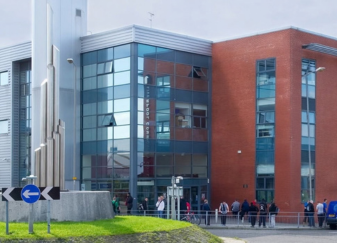
Vauxhall Road
Vauxhall Road Liverpool L3 6BN
Situated off Leeds street a 10 minute walk from one of Europes largest regeneration schemes
- Electronic and electrical principles You’ll learn how circuits work, from voltage, current and resistance through to the laws that explain how components behave together.
- Business systems Find out how engineering businesses run day to day, including how projects are planned, costed and managed.
- Maths for technicians You’ll build the maths skills engineers use every day, applying them to real electrical and electronic problems.
- Communications Develop the confidence to share technical information clearly, whether you’re writing a report, reading a drawing or presenting to a team.
- Project You’ll plan and carry out your own engineering project, bringing together everything you’ve learned on the course.
- Health and safety Learn how to work safely in an engineering environment, from spotting hazards to following the regulations that protect you and your colleagues.
- Analogue electronics Explore how analogue components such as transistors and amplifiers work, and how they’re used in circuits.
- Digital electronics You’ll learn about logic gates, binary and the digital systems found inside everyday technology.
- Microelectronics Discover how tiny components are designed and combined to power devices such as phones and computers.
- Electronic fault finding Build the practical skills to test circuits, track down faults and put them right.
- Electronic circuit manufacture You’ll design and build your own circuits, learning the techniques used to produce electronic products.
- Take your understanding of electrical theory further, including AC circuits and more complex circuit analysis.
- Programmable logic controllers (PLCs) Learn how to program the controllers that run automated systems in factories and industry.
Diplomas are vocational courses involving practical and theory based work. The course is delivered through a blend of lectures, seminars, tutorials, independent study and industry guest speakers. The course is assessed through a blend of assignments, presentations, practical tasks and job knowledge tasks. This BTEC Diploma combines practical and theory-based work. You’ll learn through lectures, seminars, tutorials and independent study, with guest speakers from industry sharing their experience. You’ll be assessed through assignments, presentations, practical tasks and job knowledge tasks.
You’ll learn in workshops equipped with industry-standard tools and machinery, building the practical skills employers need from day one. Our tutors bring experience from engineering, construction and the motor trade, and they’ll show you how the industry really works.
Organisations our learners have worked with include A and B Engineering, AandB Services, Cobalt Housing, Construction Management NWP Limited, Frank Rogers, Kimpton, Arup, Sciontec, Torus, Industry and employer links, Altrad LandD Contract and Mac Roofing and Contracting Ltd.
To join, you’ll need four GCSEs at grade 4 or above, including English or maths and any subject-specific qualification your course asks for. You can also join with a Level 2 qualification in a related subject at Merit or above. If you’re 19 or over and have a strong portfolio or relevant experience, we’d love to hear from you.
If you haven’t yet achieved GCSE English and maths at grade 4 or above, don’t worry. You’ll study them alongside your course, at GCSE or Functional Skills, and we’ll support you every step of the way.
Frequently asked questions
2 years
- Core: two written exams plus an employer-set project, set and marked by the awarding body and graded A* to E
- Occupational specialism: an extended project set by the awarding body and graded Pass, Merit or Distinction
Ready to build your career?
Apply now to start your course at The City of Liverpool College