


coming soon
V Levels
Coming soon V-levels: what’s coming next for post-16 study
V-levels are a new Level 3 vocational qualification being introduced by the Department for Education, sitting alongside A-levels and T-levels as a third main pathway for learners after their GCSEs. They’re designed as a vocational equivalent to A-levels and T-levels, and will replace Level 3 BTECs. The first V-levels will be taught from September 2027, in digital, education and early years, and finance and accounting. Further subjects, including business, care services, construction, engineering, health, legal, sales, and sports, fitness and exercise science, could follow from September 2028, subject to confirmation.
The College’s course pages currently show three well-established routes: A-levels, T-levels and BTECs. V-levels are the qualification the government plans to build around that same landscape, so expect them to appear as course options in the coming years rather than this September.
What makes a V-level different
Unlike T-levels, V-levels will let you mix and match alongside other qualifications, such as A-levels. Each V-level runs for two years and is worth 360 guided learning hours, the equivalent of one A-level. That’s a meaningful shift from a T-level, which sits closer to three A-levels and locks you into a single technical specialism.
UCAS has confirmed that V-level tariff points, at grades A* to E, will be equal to those of A-levels. That means a V-level carries the same weight on your UCAS application as an A-level grade, whatever combination of subjects you choose.
For learners who want to progress on to an A-level, V-level or T-level but aren’t quite ready, one-year Foundation Certificate qualifications will be available in education and early years, and digital.
Why V-levels matter for you
The case for change comes down to choice and clarity. V-levels will offer a vocational alternative that sits alongside the academic route of A-levels and the technical route of T-levels. That gives you a genuine third option rather than a single fork between purely academic and purely technical study.
The government has said it’s important that co-design and collaboration with the sector and employers continue to shape these reforms, which means V-levels are being built with the same employer input that already underpins courses like our T-levels. Alongside V-levels, Foundation Certificates and Occupational Certificates are also reshaping the choices available to young people at post-16.
How we link technical study to Liverpool city region employers
While V-levels are still being developed nationally, our approach to connecting technical qualifications with real employers is already established through T-levels, and it’s the model we’ll carry forward.
The College has developed strong relationships with both local firms and the regional offices of larger national and international companies, giving students a placement that gives them the best possible understanding of the careers they’re studying towards. That partnership work fed directly into our T-level results: our T-level courses achieved a 100% pass rate in August 2025.
We don’t just place students with employers, we bring employers into the classroom. Curriculum is shaped alongside the businesses who go on to employ our students, so the skills you learn match what’s needed on site. The City of Liverpool College has the widest choice of courses in the Liverpool City Region, with links to over a thousand employers, a network we intend to put to work as V-levels roll out.
- Clean Energy
- College
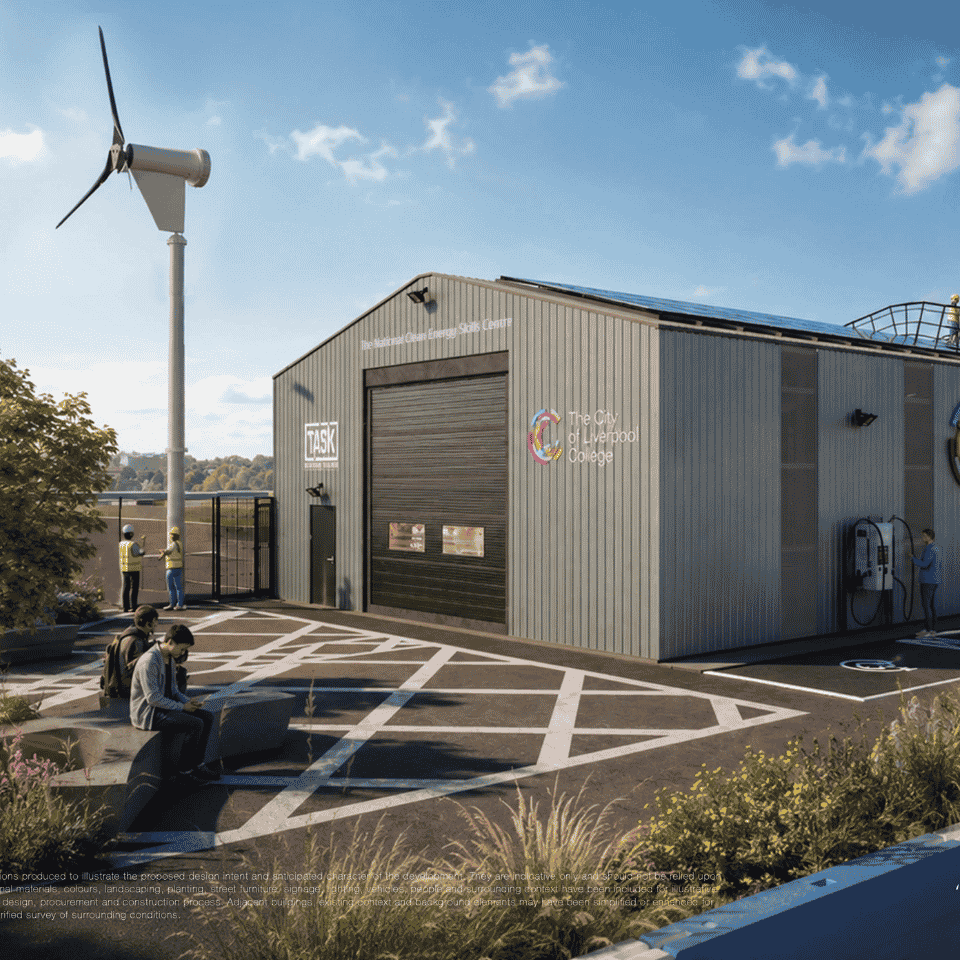
College breaks ground on £1m Clean Energy Centre
The development followsThe City of Liverpool College’s designation as a Clean Energy Technical Excellence provider by the Department for Education earlier this year, and is being funded through capital awarded as part of that status. Real-world training for real-world careers
11 August 2026

- College
The Poet Joseph Roberts
Award-winning Liverpool poet Joseph Roberts has penned an original poem celebrating the ambition, resilience and character of the city’s young people and our students as part of our new campaign.
31 July 2026
- Hair and Beauty
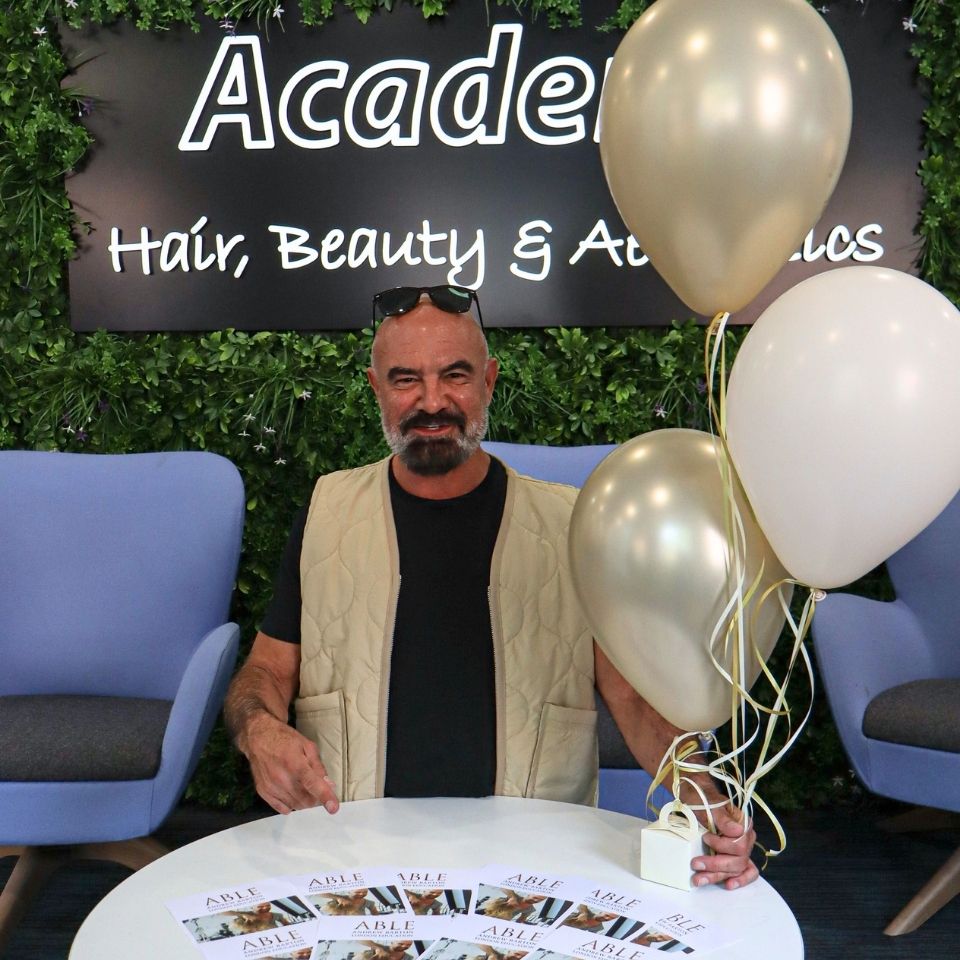
Award-winning hairdresser Andrew Barton launches ABLE programme
Celebrity hair stylist, broadcaster and educator Andrew Barton visited The City of Liverpool College on Friday 11 September to launch the Andrew Barton London Education (ABLE) Programme. The initiative will help hairdressing students turn their talent and qualifications into confident, successful salon careers.
17 September 2026

- Creative Arts and Fashion
- Performing Arts and Production
Creative Arts Students take Centre Stage
Our Expressive Arts students took to the stage for an exciting series of showcases that highlighted their talent and hard work
22 April 2026
- Creative Arts and Fashion
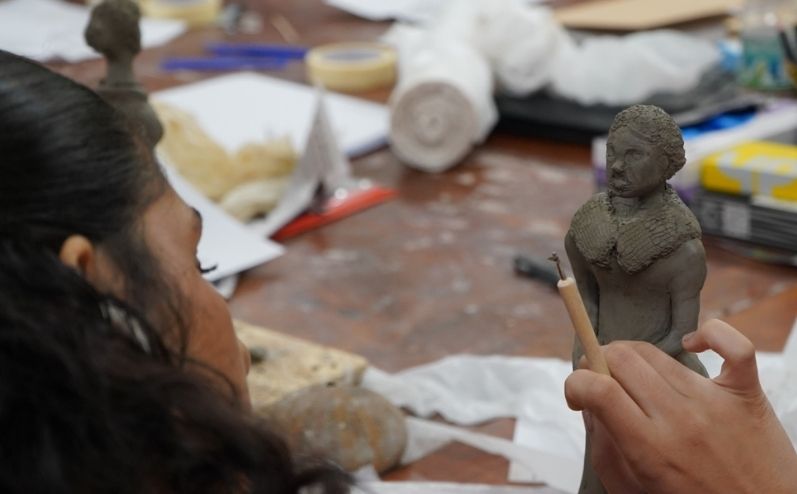
Learners partner with World-Renowned Sculptor on Mary Seacole Exhibition
Art and Design students took part in a unique and inspiring collaboration with world-renowned marble sculptor, Martin Foot, that contributed to a major cultural project celebrating the life and legacy of Mary Seacole.
23 February 2026